
Everything Worth Knowing About the Tinned Fish Trend
If you have been anywhere near social media lately, you have probably seen the colorful, vintage-looking tins stacked artfully on a wooden board next to crackers and fancy cheese with captions like “sardine girl summer.” There are videos of people on what they are calling “tinned fish date nights.” TikTok, or “TinTok,” as devotees have taken to calling it, has turned the humble can of sardines into something that looks like it belongs on a restaurant menu.
As far as food trends go, this one has some substance behind it. At Amaze, we like to research the latest health advice, so you don’t have to, and in this case, what we found is worth knowing. Tinned fish is nutritious, affordable, convenient, and more interesting than most of us gave it credit for, but like most things that arrive wrapped in a social media glow-up, the full picture is a little more nuanced than the trend suggests.
Good Things Come in Small Tins
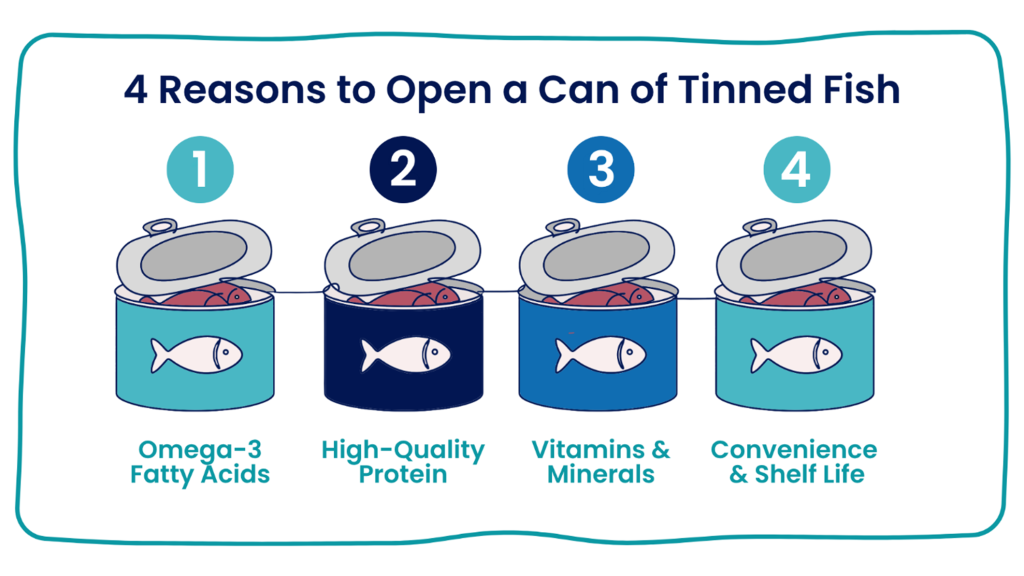
Nutritionally, tinned fish is hard to argue with.
Omega-3 Fatty Acids
Fatty fish like sardines, salmon, mackerel, and anchovies are rich in long-chain omega-3s, which support heart health, reduce inflammation, and may benefit brain function. These are the fats most Americans do not get enough of, and tinned fish is one of the most accessible ways to change that.
High-Quality Protein
Tinned fish is genuinely an excellent protein source, comparable gram-for-gram to most other meats, without requiring any cooking.
Vitamins and Minerals
You will find calcium, vitamin D, vitamin B12, selenium, and potassium in a well-chosen tin. If you eat the canning-softened bones in sardines or mackerel (don’t worry they are completely safe), you’ll get a meaningful dose of calcium on top of everything else.
Convenience and Shelf Life
Tinned fish is fully cooked, requires no refrigeration before opening, and can sit in your pantry for up to five years. For anyone trying to eat more seafood without the planning and prep that fresh fish demands, it’s a useful shortcut.
Registered dietitians broadly agree that the nutritional value of tinned fish is comparable to fresh fish. If the choice is between tinned fish and no fish, there really isn’t a contest.
Before You Take the Bait
Tinned fish is not without its concerns. A thorough review of the research, including a recent analysis published by the National Institutes of Health, raises several issues worth understanding.
Mercury and Heavy Metals
Almost all fish contain some mercury. The question is how much, and which fish you are eating. Larger, longer-lived fish accumulate more mercury over their lifetimes. Albacore (“white”) tuna tends to be higher in mercury than light tuna. Bigeye tuna and king mackerel are among the highest and are worth limiting or avoiding. Smaller fish like sardines, anchovies, and herring are generally much lower in mercury and safer to eat regularly. Independent testing has also found cadmium and arsenic in some samples of sardines and certain tuna varieties, though most products from reputable sources fall within acceptable regulatory limits.
Pregnant women, those trying to conceive, and young children should be especially careful to stick with lower-mercury varieties like sardines and light tuna, and follow their clinician’s guidance on weekly servings.
BPA and Can Linings
Many cans are lined with epoxy resin coatings that contain bisphenol A, or BPA, an endocrine-disrupting compound that can migrate from the can into the food. European regulators lowered their tolerable daily intake threshold for BPA significantly in 2023, a signal that even small amounts warrant attention. Looking for “BPA-free” labeling is a simple and reasonable precaution.
Sodium
Some tinned fish, particularly anchovies, are preserved in significant amounts of salt. A single serving of anchovies can account for up to half of your recommended daily sodium intake. A simple fix for this is to rinse the fish before eating or choose products with no added salt.
Microplastics
Research on microplastics in canned seafood is still emerging, but studies have found small numbers of microplastic particles in most canned products tested. The health implications are not yet fully understood, and no regulatory limits currently exist. It is not a reason to panic, but it is a reason to stay informed as research develops.
How to Reel in a Healthy Catch
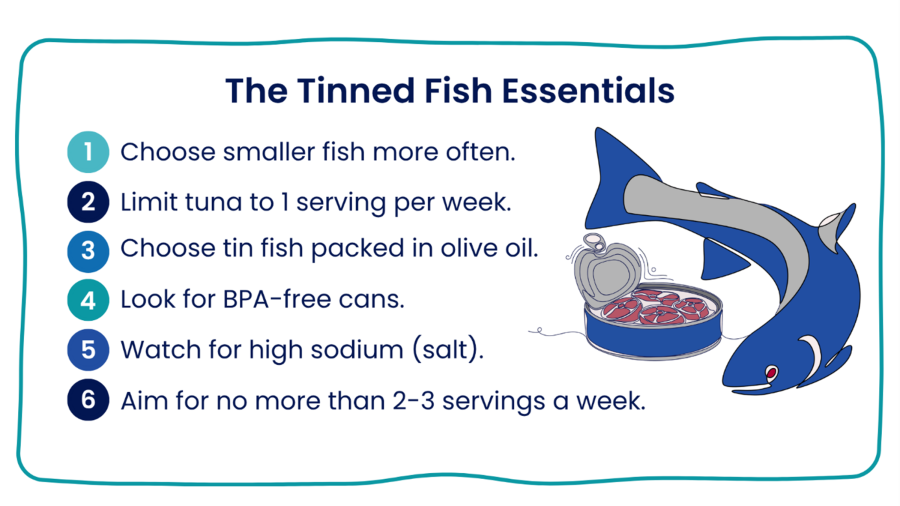
Choose Smaller Fish More Often
Sardines, anchovies, herring, and salmon are generally your best bets as they are high in omega-3s, lower in mercury, and widely available. An easy way to think about this is with the acronym SMASH: Salmon, Mackerel, Anchovies, Sardines, Herring. If it is on this list, it is usually a solid choice.
Be Thoughtful About Tuna
Albacore tuna is higher in mercury; limit it to about one serving per week. Light tuna is generally safer for more frequent consumption. Bigeye tuna is worth avoiding altogether if mercury is a concern.
Check the Oil
Fish packed in olive oil may better preserve omega-3 fatty acids and it tastes considerably better. Just be aware that some omega-3s can migrate into the surrounding oil and be lost when you drain it. Also, if you cook tinned fish, go easy on the heat as high temperatures can degrade the omega-3s.
Look for BPA-Free Cans
More brands are offering this now. We recommend making it a habit to check the label.
Watch the Sodium
Again, read the label and rinse your fish if needed. This is especially important if anchovies are your thing.
Do Not Overdo It
Two to three servings of seafood per week is the general guidance, and tinned fish absolutely counts toward that goal.
The expensive tin is not necessarily better for you. A $25 can of Portuguese sardines is not nutritionally superior to a $4 can. Buy what fits your budget and your pantry.
Tins That Punch Above Their Weight
The seacuterie boards and the viral TikToks got something right, even if accidentally: tinned fish is worth your attention. Not because it photographs well or because the packaging is beautiful, but because it delivers real nutrition at a price most other proteins cannot match, and it has been doing that long before anyone called it a trend.
The considerations in this article are genuine. Mercury, BPA, and sodium are not reasons to skip tinned fish, but they are reasons to make sure you know what you are picking up before you put it in your cart. A little label literacy goes a long way, and once you know what you are looking for, the fun part is picking what to try first.
If you happen to build a seacuterie board, we’d love to see it. Tag us on social media.
