
The 2026 Allergy Plot Twist (And How to Find a Happy Ending)
If your allergies feel different this year, you’re not imagining it. We’ve written this every year for the last few, because weird weather patterns have generally been making allergy symptoms worse for most of us. This year, things are a little more complicated for allergy sufferers.
Some people who usually suffer are getting a bit of a break. Others who typically breeze through spring are suddenly wondering why their eyes itch and their nose won’t cooperate. Once again, allergy season has decided not to follow the script.
So, what’s new in 2026? A few things, and they all come down to how unpredictable weather has become.
During the past year, we’ve seen more sharp swings between warm and cold, wet and dry. The Northeast had a particularly cold winter. Western states were especially warm and dry. That matters because plants are extremely responsive to these changes. A warm stretch can trigger early pollen release. A sudden cold snap can pause things. Then another warm-up hits and everything blooms at once.
The result is what allergy specialists are calling a “burst season.” Instead of a slow, steady rise in pollen, we’re seeing shorter, more intense spikes. Translation: fewer weeks of mild annoyance, more days where it feels like your sinuses have declared a state of emergency.
Geography is shifting too. In recent years, the South and parts of the West have carried the heaviest burden thanks to heat, moisture, and longer growing seasons. That trend continues. But this year, parts of the Midwest and Northeast are seeing more variability. A cooler winter in some areas delayed early pollen, but rapid warming has compressed the season into a tighter, punchier window.
In plain English: you may have fewer bad days overall, but the bad days may feel worse.
What is actually happening in our bodies during a burst season?
During a typical allergy season, pollen levels rise gradually. Your immune system has time to ramp up, react, and in some cases even partially adapt. In a “burst” season, that slow ramp disappears. Instead, your body gets hit with a sudden, concentrated dose of allergens over a short period of time.
First, your immune system is on high alert. If you have seasonal allergies, your body already recognizes pollen as a threat, even though it isn’t one. You have IgE antibodies sitting on the surface of immune cells, like mast cells, essentially waiting for pollen to show up.
When a burst of pollen hits, a lot of those allergens enter your nose, eyes, and airways at once. That means more IgE antibodies get triggered simultaneously.
This leads to a rapid “degranulation” of mast cells. In other words, those cells dump out a surge of chemicals, especially histamine.
Histamine is what causes the classic symptoms:
- Blood vessels dilate, which leads to redness and swelling.
- Nerve endings get irritated, which causes itching.
- Mucus production ramps up, which leads to congestion and a runny nose.
- Because this is happening all at once, symptoms can feel more intense than usual.
Second, inflammation ramps up faster and more aggressively. It’s not just histamine. Your body also releases other inflammatory signals like leukotrienes and cytokines. These recruit more immune cells to the area, which amplifies swelling in your nasal passages and airways.
In a slower season, this process builds gradually. In a burst season, it spikes quickly. That’s why people often say, “I was fine yesterday and miserable today.”
Third, your body doesn’t get much time to regulate the response. With gradual exposure, some people experience a mild “dampening” effect over time. In a compressed season, the immune system is constantly being re-triggered before it can settle down.
There’s also a mechanical factor. High pollen days often mean more particles physically landing on your eyes, skin, and respiratory tract. That alone increases irritation, even before the immune system fully kicks in.
Put it all together, and a burst season is essentially a bigger exposure, a faster immune reaction, a stronger inflammatory response, and less recovery time in between.
There’s also something else happening that doesn’t get talked about enough. Air quality and allergies are starting to overlap. Smoke from wildfires, urban pollution, and even high ozone days can irritate your airways and make your body more reactive to pollen. So even if pollen counts are technically “moderate,” your symptoms may feel anything but.
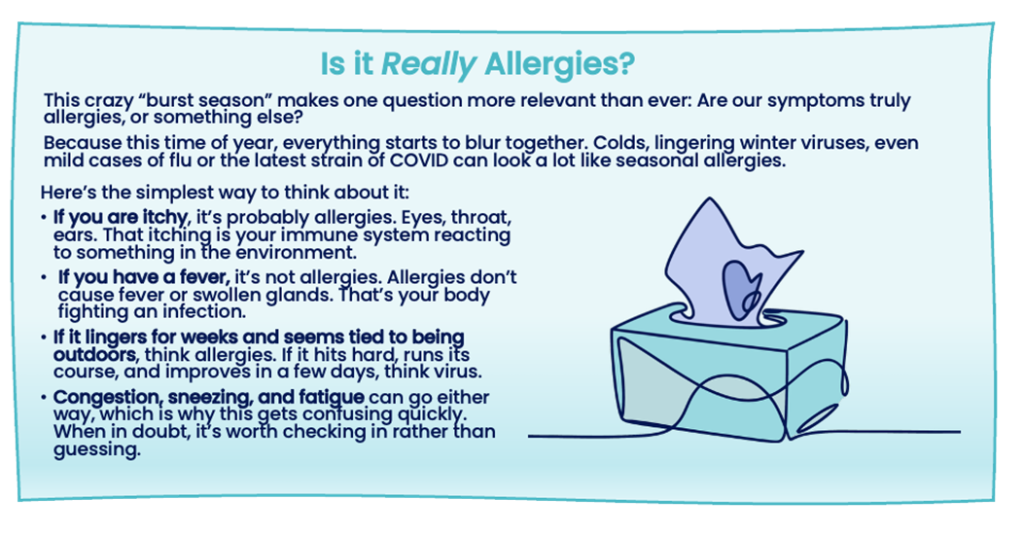
The good news is that the fundamentals of managing allergies still work. In fact, they matter more in a “burst” season like this one.
Start Treatment Now!
The biggest shift is timing. Waiting until you feel miserable is no longer a great strategy. By the time symptoms show up, your immune system is already fully engaged. Starting antihistamines and/or steroidal nasal sprays early, before peak exposure, gives you a much better shot at staying ahead of it. Consistency is key and many experts recommend starting treatment a full four weeks before the season kicks in!
There are also a few things that continue to be surprisingly effective, even if they’re not new.
Tried and True Remedies
Keeping pollen out of your home still makes a real difference. Shoes off at the door. Showering before bed. Windows closed on high pollen days. None of this is groundbreaking, but all of it works.
Nasal rinses and saline sprays remain some of the most underrated tools out there. They physically remove allergens instead of trying to out-medicate them. Not glamorous, but very effective.
Masks, which many of us have mixed feelings about at this point, are still useful in two specific scenarios: high pollen days and yard work. They reduce what you inhale, which reduces how much your body must react to.
Things That Sound Promising but Probably Aren’t
And then there’s the category of things that sound appealing but don’t hold up well under scrutiny. Supplements, essential oils, and the idea that local honey will “train” your immune system have all been studied. None consistently deliver meaningful relief. If something feels good and is harmless, fine. But it’s not a substitute for treatments that actually work.
The Future
Treatments are evolving. For people with more severe symptoms, newer approaches to immunotherapy and combination medications are making a difference. If your usual routine isn’t cutting it anymore, it’s worth revisiting the conversation with a medical provider rather than assuming you just have to tough it out.
The Bottom Line
Allergy season isn’t just getting longer. It’s getting less predictable. That means paying a little more attention, starting treatment earlier, and adjusting when your body tells you something has changed.
And if your symptoms don’t quite fit the allergy pattern, or they’re hitting harder than expected, don’t guess your way through it.
